Traumatic experiences are something almost everyone faces at some point in their lives. Accidents, the loss of loved ones, violence, natural disasters, war, or even long-term stress — all of these can leave a deep mark on the human psyche. Post-Traumatic Stress Disorder (PTSD) is not uncommon. However, many people still don't fully understand this psychological condition or just how devastating its consequences can be.
What Is PTSD?
According to the World Health Organization (WHO), Post-Traumatic Stress Disorder (PTSD) is a mental health condition that develops in some people after they have experienced or witnessed a traumatic or terrifying event. This could be a natural disaster, a severe accident, an assault, a terrorist attack, combat, or situations involving a threat to life, violence, or serious injury.
People with PTSD may relive the event over and over through memories, dreams, or nightmares. It is as if their mind gets stuck in a traumatic experience. The event might be long gone, but the body and brain continue to react as if it is happening right now.
Does Everyone Who Experiences Trauma Develop PTSD?
No. And this is a very important point to understand.
According to WHO estimates, roughly 70% of people worldwide will experience at least one potentially traumatic event in their lifetime, but only about 5.6% of them will develop PTSD. In the general population, this rate is approximately 3.9%.
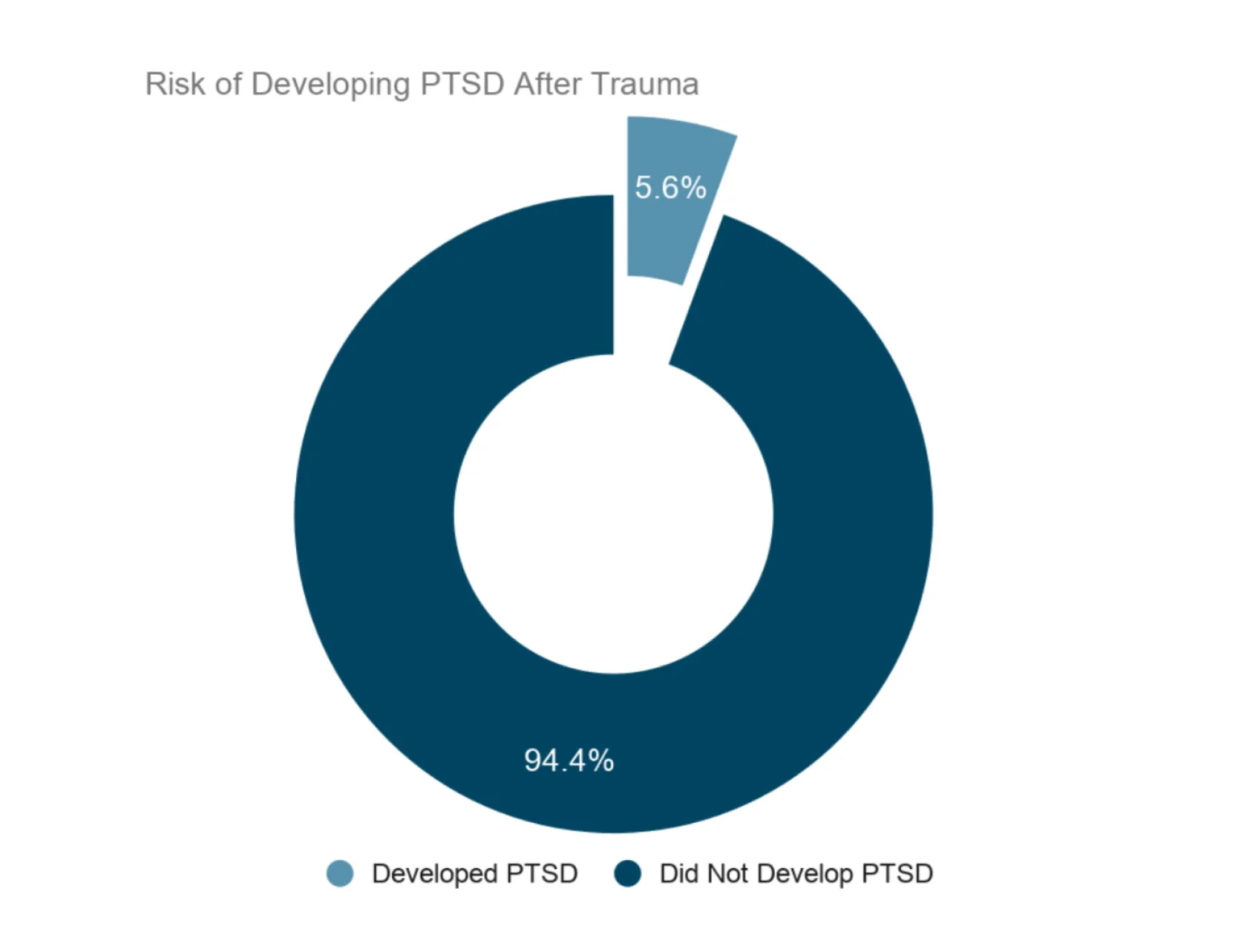
The risk of developing PTSD depends on many factors, including:
- The type of event. Following armed conflict or violence, the risk can reach 15.3%, and it is even higher after sexual assault.
- The intensity and duration of the traumatic experience.
- Age. Children and teenagers can be more vulnerable.
- Social support. Having loved ones who are understanding and supportive can lower the risk.
- A history of previous trauma or mental health conditions. For example, pre-existing anxiety or depressive disorders.
- Genetic factors. Certain genes can make a person more susceptible to stress.
In other words, trauma does not always lead to PTSD, and it has nothing to do with willpower. It is about a complex interaction between the mind, biology, and external circumstances.
Why Do Some People Get PTSD While Others Don't?
Studies show that susceptibility to PTSD can depend not just on what happened, but also on how our bodies are wired. Specifically, certain genetic traits can make a person more sensitive to stress, or conversely, help them cope with it better.
Scientists have discovered that specific gene variants (such as PAC1, BDNF, RORA, and FKBP5) are linked to how intensely a person reacts to fear, how long they experience anxiety, and even how effective their therapy will be. People with a certain variation of the BDNF gene (known as the Val66Met variant) are more likely to experience severe emotional distress and respond poorly to treatments that involve revisiting traumatic memories in a safe environment.
Core Symptoms of PTSD
PTSD can emerge after surviving a traumatic event — such as an accident, violence, combat, or loss. While some stress reactions are completely normal, PTSD is diagnosed when symptoms last for more than a month, significantly disrupt daily life, and are not caused by medication, alcohol, or other medical conditions.
According to the National Institute of Mental Health (NIMH), four groups of symptoms must be present for an adult to be diagnosed with PTSD:
- Re-experiencing symptomsA person relives the event over and over through intrusive memories, dreams, or flashbacks. They might also have intense physical reactions to triggers—sounds, smells, words, or situations that remind them of the event.
- Avoidance symptomsThis is the conscious or subconscious avoidance of anything that might bring the trauma to mind: places, people, conversations, or even their own thoughts. A person might completely alter their usual lifestyle just to avoid encountering triggers.
- Hyperarousal symptomsThese include constant tension, irritability, trouble sleeping or concentrating, as well as sudden outbursts of anger or reckless behavior. It is often a state of "high alert" as if danger is still lurking nearby.
- Changes in cognition and moodA person might struggle with their memory, develop a negative view of themselves or the world, and experience feelings of guilt, shame, or fear. They lose interest in their usual activities, feel detached from others, and find it hard to connect.
Every case of PTSD is unique: for some, the symptoms fade in a few months, while others might live with them for years. PTSD is frequently accompanied by depression, anxiety disorders, or substance abuse. Personal history, the level of available support, and biological and psychological factors all play a role.
How PTSD Is Treated: Science-Backed Approaches
In its 2025 clinical practice guideline, the American Psychological Association (APA) recommends several highly effective treatments for post-traumatic stress disorder. These methods are designed to help people overcome the aftermath of traumatic events and improve their quality of life.
Main Recommended Methods
Cognitive Behavioral Therapy (CBT)
This approach helps change the negative thoughts and behavioral reactions tied to the trauma. The therapy typically lasts anywhere from 12 to 16 sessions and involves working through the beliefs that keep the PTSD symptoms alive.
Cognitive Processing Therapy (CPT)
This method focuses on reframing traumatic events and understanding how they impact your current life. Patients learn how to identify and change the harmful beliefs that took root after the trauma.
Prolonged Exposure Therapy (PE)
Patients safely and gradually face their traumatic memories and situations in order to reduce fear and avoidance. This method helps dial down the emotional reaction to triggers.
Eye Movement Desensitization and Reprocessing (EMDR)
During this therapy, patients focus on traumatic memories while simultaneously performing specific movements (usually eye movements). This helps lift the emotional weight attached to the trauma.
The choice of treatment depends on the individual's specific needs, the nature of the trauma, and whether there are any co-occurring conditions. It is crucial to reach out to a qualified professional who can help determine the best possible approach for you.
Helpful Resources
Якщо ви або хтось із ваших близьких переживає наслідки травматичних подій, варто знати, куди можна звернутись по підтримку чи додаткову інформацію. Нижче — перевірені ресурси, які можуть допомогти.
If you or someone you care about is dealing with the aftermath of a traumatic event, it is important to know where to turn for support or additional information. Below are some verified resources that can help.
Information Platforms
- The National Institute of Mental Health (NIMH) — an official source for information on PTSD: symptoms, causes, and treatment options. nimh.nih.gov
- The American Psychological Association (APA) — features clinical guidelines and materials for both professionals and patients. apa.org/ptsd-guideline
- The National Center for PTSD (U.S. Department of Veterans Affairs) — offers in-depth articles, self-help programs, and mobile apps. ptsd.va.gov
Mobile Apps
- PTSD Coach — a free self-help app developed by VA professionals and the US Department of Defense. It works as a journal, a reminder, and a stabilization tool. Available on iOS and Android.
- MindShift CBT — helps manage anxiety through CBT exercises, daily thought tracking, and ongoing support. Available for free.
Conclusion
Post-Traumatic Stress Disorder is not a weakness, nor is it something you can "just get over." It is a serious condition that can take a heavy toll on your well-being, your relationships, and your daily life.
But the good news is that PTSD is highly treatable. Today, there is a lot of awareness around this topic, and governments and global organizations provide free support to those who need it.
So,if this sounds like you or a loved one in this description — don't wait. Reaching out for help is the very first step toward recovery. You are not alone.