In a world where every minute is packed with news and changes, we constantly hear about the importance of flexibility, adaptability, and continuous growth. At the same time, we might catch ourselves feeling comfortable waking up at the exact same time, making a familiar breakfast, and going through our usual motions. This isn't laziness or a lack of creativity. It is simply how our brain works.
In this article, we will explore why our brain loves routine so much and what happens when that routine is broken.
What Is Routine from a Neuropsychological Perspective?
From a neurobiological standpoint, a routine is a series of actions that have become so familiar to the brain that they are performed automatically, without any extra effort. These aren't just behavioral "habits"; they are specific neural pathways that are forged in the brain over time, allowing us to act quickly and without overthinking.
The Habit Formation Process
When we repeat an action over and over, it shifts into the automatic category. Think back to the first time you made an omelet. You had to think about how many eggs to use, whether the pan was hot enough, and when to add salt. You were tense and hyper-focused. But after making that omelet a few times, you stop thinking about the details, and the dish seems to cook itself. That is a routine.
Habits are formed like this: while we are learning something new, our prefrontal cortex (the brain area responsible for focus, decision-making, and planning) is highly active. But over time, as the action becomes familiar, it "moves" to another part of the brain — the basal ganglia. This is the exact structure that stores automated actions.
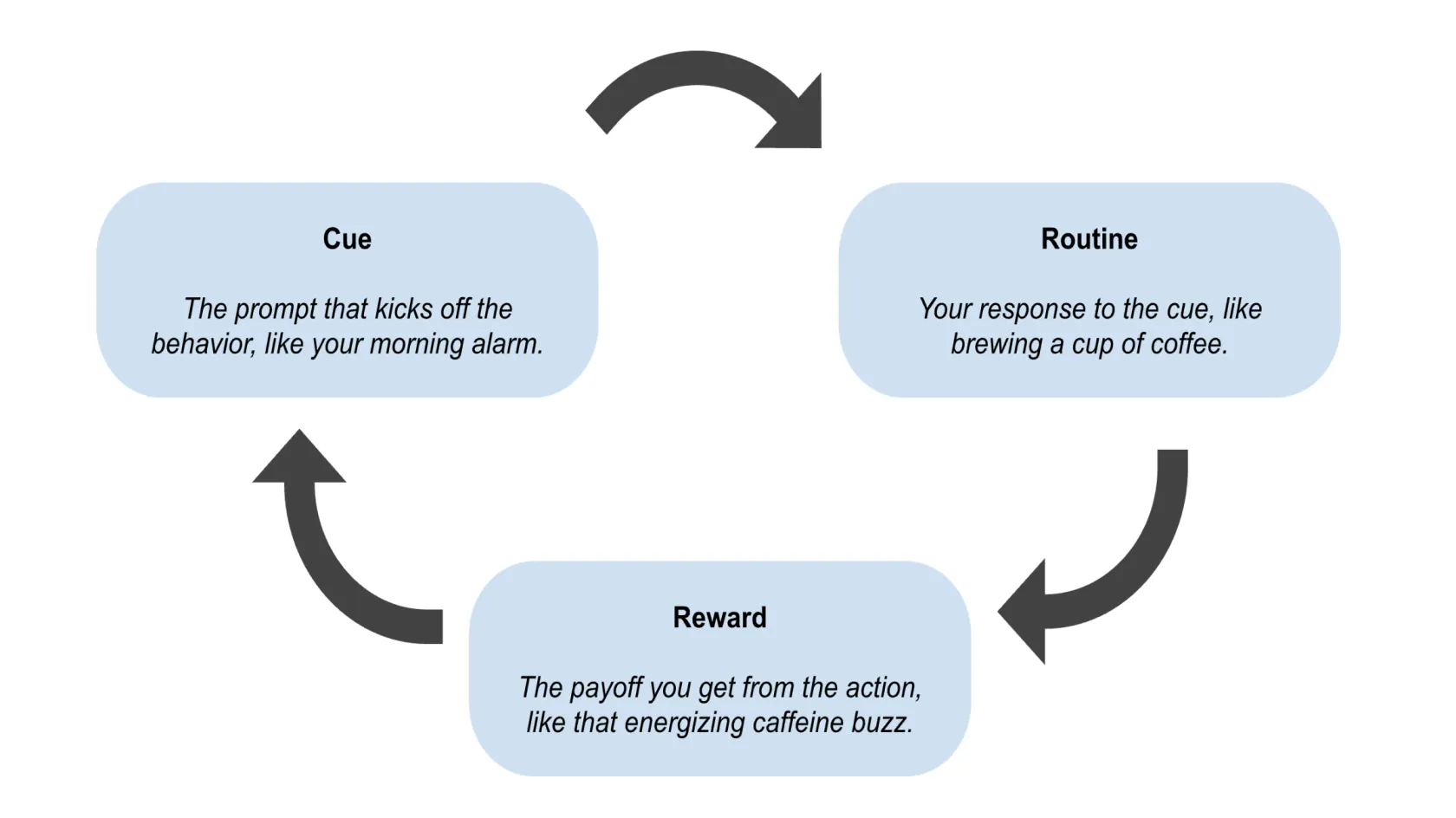
This mechanism is perfectly illustrated by the "habit loop" model described by Charles Duhigg. At its core are three key elements: a cue (like waking up in the morning), a routine (brewing coffee), and a reward (feeling energized). Over time, the brain begins to anticipate the reward the moment the cue appears — and triggers the action automatically. This is exactly how our daily routines are built.
How Long Does It Take to Form a Habit?
According to a study published in the European Journal of Social Psychology, it takes an average of about 66 days to form a habit, though the actual range varies from 18 to 254 days. It all depends on the complexity of the action, how often it is repeated, and the time of day: simple habits, like drinking a glass of water in the morning, form much faster than, say, working out regularly in the evening.
Routine and Energy Conservation
Habits and predictability hold a special appeal for us. We like it when our days follow a familiar rhythm. It brings a sense of safety, order, and control over our own lives. And this is no coincidence.
The brain is one of the most energy-consuming organs in the body. Even though it makes up only about 2% of our body weight, it accounts for up to 20% of our energy consumption. The more new, unpredictable information there is, the more resources are needed to process it. That is why the brain "loves" patterns: if an action is already familiar, it doesn't have to overthink it, saving its strength for situations where deep focus is actually required.
Most of us value predictability in our daily lives — and that is perfectly normal. When we know what to expect from the day, we feel an internal sense of balance. Ordered actions help reduce chaos, lower anxiety levels, and, crucially, prevent the brain from becoming overloaded with unnecessary decisions. However, routines also offer other benefits:
- A sense of control. When our day has a clear structure, we aren't just "going with the flow"; we are managing our time and actions. This boosts self-confidence and helps us feel grounded, even during difficult periods.
- Reduced stress. Having a plan relieves the pressure of uncertainty. If you understand "what to do and when," the need to constantly keep everything in your head disappears.
- Increased productivity. When the day is structured, we get more done and stop wasting time on chaotic task-switching. This provides a sense of accomplishment and satisfaction at the end of the day.
What Happens When Our Usual Routine Is Disrupted?
Disrupting your usual schedule activates the systems in the brain responsible for the "fight or flight" response. This spikes your cortisol levels — the stress hormone — which can affect your sleep, focus, and emotional state. Studies show that chronic stress can lead to structural changes in the brain, specifically in the hippocampus and prefrontal cortex, which govern memory and decision-making.
The Consequences of a Disrupted Routine
- Increased anxiety and depressive symptoms. Disrupting daily habits like sleep, eating, or physical activity is linked to a higher risk of developing anxiety and depressive states.
- Decreased productivity. Studies show that messing with morning routines — like skipping your usual cup of coffee — can lower your focus and work efficiency throughout the entire day.
- Poorer sleep quality. An irregular sleep-wake schedule can lead to insomnia and other sleep issues, which in turn impacts your overall health.
- Disrupted circadian rhythms. Changes to your daily schedule can affect your internal biological clocks, which regulate many physiological processes, including your mood and energy levels.
How Can You Adapt to Change?
Remember that a disrupted routine is a challenge, but it is also an opportunity to rethink your habits and create new, more adaptable behavior models. So, how can you adapt to change?
- Establish new rituals. Even simple actions, like a daily walk or setting aside time to read, can help restore your sense of stability.
- Maintain a regular sleep and eating schedule. This will help stabilize your internal biological rhythms.
- Practice relaxation techniques. Meditation, breathing exercises, or yoga can lower your stress levels and improve your overall well-being.
- Be flexible. Accept that change is a part of life, and learn to adapt to new circumstances without excessive self-criticism.
Can a Routine Be Harmful?
Although a routine provides stability, it can sometimes start working against us. This happens when a familiar scenario stops being helpful or even turns into an unhealthy state.
Mindless Autopilot
We can become so accustomed to our daily actions that we stop noticing when they no longer serve us.
Routine as a Method of Avoidance
Sometimes we create an overly rigid schedule just to avoid thinking about difficult decisions or emotions. Constant busyness can mask fatigue, anxiety, or even burnout. A routine like this becomes a "defensive wall" that, in the long run, only makes the situation worse.
Staying in Your Comfort Zone
When every day looks exactly like the one before and there are no challenges, we gradually lose our sense of growth. A routine can strip us of new experiences, spontaneity, and development. In this state, it is easy to lose motivation, creativity, and even your sense of purpose.
Conclusion
Routine is an excellent solution for creating stability and reducing stress in our lives. It allows the brain to conserve resources by automating familiar actions.
However, it is important to remember that a routine is not always unconditionally beneficial. Over time, what once brought value can become burdensome and unnecessary. It is worth paying attention to life changes, rethinking your routine actions, and adapting your habits to fit your new circumstances.